The Only Way Out Is Within By: Rohini Singh on Mar 30, 2012 | 2779 Views | 48 Responses CategoryNew Age ADD TO SPIRITUAL DIARY
Do you feel well? If you're feeling joyful, content, grateful, alert and expansive, your system is faring well. If you're not quite so comfortable, you're up against energy thieves that are enjoying a feast at your expense. You know that solution: Plug the leaks, drop resistance, face fear, banish worry or practise forgiveness, as the case may be.
Once you plug the leaks, your energy system immediately begins to recover. As you continue to detoxify yourself, your self awareness increases. You begin to choose your responses and hence shift the whole paradigm you're living in.
You assume total responsibility for whatever state you find yourself in and know that only you, and not external circumstances, can resolve any problems that may crop up.
In actuality, this journey is about letting your mind, the small one that you're familiar with, dissolve and expand into the Big Mind, the place of infinite potential. Tapping into it allows you flow, surrender, co-creation and higher guidance.
The heart, remember, guides you to increasing connectivity,
joy and love. It replaces pain as a habit. The journey has to be lived, not merely understood.
You can start on your journey right now by doing some of the following:
Every night write 10 things that youre grateful for in a journal kept especially for this purpose. It gets you to focus on what's good in your life, not on what isn't. And it's a proven energy rule. What you focus on expands. This is the easiest way of attracting more of what makes you happy and being open to receive.
Meditation provides the break that your mind needs and deserves and helps you cope with stressful lifestyles. When you meditate, brain-wave activity slows down and depending on the depth of your meditation, you can access more profound levels of creativity, healing, relaxation and de-stressing. This is the time when the small mind plugs into the Big Mind, gets recharged, and accesses an area of infinite potentiality.
Breathe : Make a small placard that displays this one word. Put it on your office desk or at home where you can see it frequently. Every time you do, just take two deep breaths with awareness and continue with your regular activities. This is an incredible awareness exercise.It helps you create the space you need to make conscious choices.
Cut cords: This is a magical practice. When we interact with people, we're automatically connected with them by a cord at the solar plexus, the area just below the rib cage. We exchange energies through this cord which is strong in the case of people we're close to. To keep your energy system clear, you must disconnect and terminate this exchange each day with every person you interact with.
It's an excellent practice if you've had an unpleasant conversation with someone. This is what you do: Close your eyes. Visualise the cord. Imagine yourself cutting it. Mentally say: I cut and release all connections with you at the solar plexus level. Reconnect the cord at the heart level. Say the words: Only love remains between us.
Steal joy: This is an amazing practice that you can use to trick yourself into changing your mood or state when youre feeling miserable. First, accept that this is so and allow it to be. Don't fight it. Converse with yourself; take a break from your misery, for just a day.
Injecting these little exercises in awareness into your daily life will make you feel in charge, starting immediately.
Showing posts with label Spiritual. Show all posts
Showing posts with label Spiritual. Show all posts
Saturday, 31 March 2012

Thursday, 15 March 2012
Meditation
Humanist Meditation

I recently spoke, as part of a panel on meditation and Humanism, at the American Humanist Association's annual conference. I will be providing more details on that presentation soon. However, for now I thought I'd share a little of something I'm writing on meditation basics. This explanation will take place over a few parts. Here is the first part for today:

Breathing meditation is the most general kind of attention practice, and necessary in order to perform other kinds of attention practice. It will therefore tend to be the most commonly practiced and introductory of forms. However, foundational though it may be, mastering meditation requires just as much discipline and skill as mastering any other practice, so it would be a mistake to consider it necessarily easier or less advanced than other practices.
While meditators may appear to the outside observer to simply be relaxing, very specific mental exercise is taking place within. A person may seem exactly the same in two sessions but may have had a wonderful success in one session, and performed poorly in another. It is normal for beginning meditators to find meditation trying and difficult. At first, they may even wonder what the big deal is. But over time, noticeable improvement is made, and you will know it in your session as you attain deeper levels. The improvement will also manifest outside your session in the form of greater attention span, depth of attention, focus, and peace of mind. The ability to focus attention and increase awareness is what allows for greater inner and outer mindfulness – and these abilities are foundational to many other practices, as well as the overall endeavor to internalize many philosophic teachings from mere knowledge to a more intuitive level.
Purpose
The basic premise is simple: our untrained minds generally tend to bounce from topic to topic, state to state. This sort of associative jumping about is called ‘monkey mind’ by the Buddhists. It is very noticeable in children, but adults usually suffer from it as well. Even very intelligent people (sometimes especially intelligent people) will tend to ruminate over all kinds of things endlessly. This is seldom a matter of efficient ‘multitasking’. Rather, it is a sort of daydreaming that, at best, results in a lack of focus and being ‘someplace else’ than present. At worst, ruminations can be a source of great frustration and stress. In either case, mindfulness is not possible in such a state because mindfulness involves constant awareness of one’s self, one’s thoughts and feelings, one’s environment, and one’s situation in the present, both internal and external.
Meditation allows us to improve our ability to consciously direct our attention where we decide it will go, and for how long. This is done much like working out a muscle. In meditation, we select something constant upon which to focus. One of the best and oldest things to select is the breath – because no matter your circumstances, your breath is always with you as long as you are alive.

Position
First, it is important to consider your body position. Most people have seen meditators seated with legs crossed, hands either folded in the lap or upturned and resting upon the knees, and a straight posture. These traditional positions may work for many people but we are not so concerned with any one specific position. The key concern, rather, is this: you should sit in a manner that (a) allows you to breathe easily, (b) allows your body enough comfort that you can remain in that position throughout your meditation without your body becoming a distraction, and (c) is not so comfortable that it encourages you to fall asleep.
It is therefore not recommended that you meditate while lying down. Some may choose to sit in a chair, but the chair should allow your posture to be straight enough to breathe well – not slouched. Sitting up straight is one area where initial muscle discomfort will be worth the practice of learning to maintain the posture. As for legs, conditioning over time may enable you to become capable of sitting on the floor with them crossed if that is currently uncomfortable. However, that is a separate physical practice and endeavor - distinct in many ways from the practice of meditation per se. Thus, a seated meditator can become as proficient at meditation as a cross-legged meditator. Again, regardless of the position, the essential matters are that it allows good breathing, is not distracting, and will not make you fall asleep. Essentially, you should use a posture that will allow you to ‘forget about your body’ during the duration of your meditation.

People meditate with eyes open or shut, but shut is generally the preferred. Further, when shutting your eyes, it will be important to learn not to visualize various imagery (something that can be challenging at first for visual thinkers). Instead, the vision should simply be ‘switched off’, even including internal ‘mental visions’.
The mouth can be slightly open with the jaw hanging loose. A good position for the tongue can be let loose, but touching the back of the two front teeth and roof of the mouth, but this may vary for individuals. Again, the key should be relaxation and no distraction.
In the next articles I will continue with notes on body scanning, focusing, going deeper, immediate after effects, and long-term effects.
Meditation Aides
You will also need to think about how long you’re going to meditate. 15 minutes may be a good amount of time for beginners; for some 20 minutes may be ideal. You can eventually work up to 30 minutes. Some meditate longer, but if you want to establish a daily routine it is important to select something reasonable and sustainable within your schedule. You’ll need to establish a way to alert yourself when the time is up. This can be done simply with a stop watch, a kitchen timer, etc. If you are in a guided meditation the guide will alert you. There are also smartphone meditation applications that allow you to set a time and have nice relaxing chime sounds to choose from. There are also online videos available with guided meditations featuring voices, music, etc. However it is achieved, a simple chime after a designated time is probably best for beginners.
Some people light incense when meditating or performing other rituals. The olfactory sense (smell) is one of the most intimately connected senses with our memory centers. Therefore, having a special scent is a good way to shift our state of mind into one that is conducive to the focus of the ritual or practice.
With your surroundings established and your physical position selected, you are now ready to begin.
Body Scan
The first part of the process should be a mental review of your body to ensure you are actually relaxing it. Often we hold muscles tightly clenched without even realizing it. Therefore, you should take a deep long breath and let it out through your nose. Now imagine the top of your head being scanned. As the line around your head moves down over your face, your muscles in that area should relax: first the temples, forehead, brow; next your cheeks, jaw muscles, ears, neck, etc. Move the encircling line down over your neck, shoulders, down your arms to your fingers, down your back, stomach, legs, feet, and toes – relaxing each group as you go. Do not go too quickly so you may consider all areas. If you feel you need to, you can slowly return to the top of your head.
Now take one more deep breath and release your attention from your body. From here after, your breathing should not be controlled – just let yourself breath in and out automatically without trying to direct it, regardless of how fast, slow, deep, shallow, regular, or irregular that is.

Focusing
Now, keeping your eyes closed, focus your attention on your breath. There will be a temptation to control your breath or try to make it regular or deeper, but you should avoid that temptation. Simply watch your breath without directing it. The portion you should zero in on is the air moving just past the edge of your nostrils, as it moves in and out. You will hear it and feel it moving past the nostrils like a tide coming in and out. Try to focus exclusively on that experience without thinking about it in ‘words’. Also ignore any visualizations, sensations from your body, or other thoughts.
At this point, you may find it helpful to count your breaths. If you do so, as you inhale do not think anything – just focus on the inhalation. Then, as you exhale, think, “one...” You can think this word as lasting as long as the exhale, still focusing attention on the air moving out of your nostrils. As you breathe in, try to think nothing in between other than simply observing the inward breath. Breathing out, think, “two…” Go up to five and then return to one. Remember, while you are watching your breaths and counting along, you are not controlling them in any way – simply letting them happen as your body naturally reflexes to breathe.
After you exhale and count a number, if you are rested, there will probably be a few seconds before your body naturally induces the next inhalation. Because you are focused on the inhalation during it’s time, and you are counting during the exhalations, this short period may be the most tempting for your attention to wander. As you complete a counting, such as, “twooooo…”, try to let your mind simply drift off of the end of the word and remain still, thinking of nothing at all until the next inhalation arises to focus upon.
By the way, returning to 1 in the counting in a cycle is important. If you do not return in this cycle from 5 back to 1 and instead continue on to higher numbers, it will be easy for the counting to end up on ‘autopilot’ as your mind wanders off to other things. The return is the indication that you really are paying close attention to the counting. Furthermore, if you fail to remain focused on your breath, you can attempt to simply get through one whole cycle 1-5, thus making the challenge one of bite-sized chunks. Then, you can attempt another cycle – always remaining in the present.

Wandering & Correction
As you attempt meditation, your mind will inevitably wander. Things will pop into your head such as the day’s to-do items, what others around you might be doing or thinking, what the random little sounds you’re hearing might be, physical discomfort, interesting or random memories, or perhaps more concerning ruminations about various life problems. As this happens, it is important to catch yourself and return your focus exclusively to your breath. If you did not, then meditation would not be unlike daydreaming or lucid dreaming. Perhaps a nice endeavor in its own ways, but not meditation. As these things arise in your mind, simply see them as objects and set them aside, moving your focus gently back to the breath.
Despite your best efforts, your mind will do this many times, and will need to be brought back to the breath many times. Just as important as catching and directing yourself back, it is also essential that you not let this frustrate you. Remember, thinking about the fact that you’re not thinking about your breath is also ‘thinking about something other than your breath’. Instead, simply bring your attention back to your breath as though it were a solitary task – without frustration because of past needs to do so, and without aggravation because of a fear of needing to do it again in the future. As you meditate there is only the present, and in that present only the breath. Do not think of this wandering as a ‘failure to meditate’ or as an exception to meditation. The wandering, and the following corrections in focus, are all part of meditation – all is just as it should be.
Next time I will conclude this series on meditation with discussion of going deeper, immediate after effects, and long-term effects.

Going Deeper
Even though a wandering mind and the need to correct its focus back to breathing is to be expected, it is a fact that over time you will become better able to keep your attention on your breath without any other thoughts arising and for longer periods of time between mental wanderings. This increase in ability is noticeable within sessions, but also continues from session to session if you practice meditation regularly.
With that increased ability to maintain attention, comes other effects during the time you are in a meditation session. These include: greater environmental awareness, loss of body, and consciousness detachment.
The first, and easiest to see, is greater environmental awareness. During a meditation you come to notice all of the little and subtle sounds and sensations around you – the clock ticking, birds, cars driving by, the wind, people talking in the distance, and so on. The fact of this awareness as you progress may seem contradictory since these things can be distractions which cause you to have to reset your focus back on your breath. While that is true, it is also true that before you were meditating many of these things would have gone completely unnoticed by you. The reason you notice them during your session is a sign that your mind is becoming still. Throw a pebble into a stormy ocean and its effects are lost, but in a still pond its ripple effects are significant. While the perception of these previously unnoticed things is indeed another set of thoughts to be set aside so focus can be returned to the breath, they are also a sign of progress because a still mind is one of the aims of meditation.
The second effect you may experience during a session may take some practice, perhaps over several sessions, before you start to get glimpses of it. Loss of body is, of course, a figurative description. But the general sensation will be a lack of perception of the body; it’s little aches, itches, tiny movements, etc. This will bring about a feeling of detachment from the body, but is simply the result of an extreme focus. Nevertheless, this feeling – when it happens – is a sign of improvement in your technique.

The tricky thing about loss of body, is that it is not only rare at first, but tends to be very brief. If one is consciously focused on trying to have a loss of body experience, then it is impossible, as the experience results from a lack of conceptual thinking. Once the experience happens, it often ends quickly. Usually, as soon as a person begins to notice that they are experiencing a loss of body sensation, the noticing of it causes the mind to put a label on it, and turn the experience into a mental object. The moment you think, “I’m having a loss of body experience!” you have now lost your focus. Before, you had begun to enter a state of experience without language and labels and without distinctions between things. But calling your mind to think of the loss of body experience creates a distinction between it and other experiences, and between you and your environment. Inevitably, all of the usual concepts flood back into your consciousness. The mind looks to see if the body is there and, of course, it is. Your mind begins ‘checking the mailbox’ to see if any messages (sensations) from the body have arrived – which, of course, they have.
But like everything else, the mind improves over time. With continuous practice, these experiences become more frequent, easier to enter, and last longer.
Another experience you may have during mediation might be called consciousness detachment. We, as persons, are made up of many functions and properties (aggregates) which, working together in complex relationships, yield an overall impression of ‘self’ which we think of as ‘us’. These include memory, emotions, logical ability, selection capabilities, perceptions, and more. But if we were to slowly imagine these properties peeling away, and if we were to look at them individually, there is no one property we could convincingly identify as ‘us’. We are, rather, a function of all of these activities. Another one of these aggregates is consciousness. This is not so much awareness of certain information (such as awareness of our surroundings or of the contents of our thoughts). Rather, this is the actual first-person experience of ‘likeness’ – i.e., what it is ‘like’ to be an experiencing being. One might imagine simpler animals or insects having this feeling of what it is like to be them, without the sophistication of integrated memories of any complexity. Some consciousness philosophers and neurologists call this sensation qualia.

After a person leaves behind all other sensations of body, their surroundings, and other tangible thoughts, their minds enter another state. Here they experience that consciousness in a completely detached form, without the usual accompanying thoughts, feelings, opinions, judgments, memories, labels, sensations, concerns, and other impressions. They simply ‘exist’. Here it is said one can experience the universe ‘as it really is’ bereft of our usual framing of it.
Immediate After Effects
What short-term after effects can one expect from a quality meditation session? The most basic effect is a relaxed and low-stress state, usually accompanied by a sense of patience, contentment, and pleasantness. In addition to these, the mind will be much more focused, controllable, and deliberative. If one were to watch a speaker just after, for example, it would be easier to focus on the speaker for an extended period, while all other distractions would be easily set aside. If one were to engage in some kind of mental task, they would likely be more effective at it, in a heightened state of concentration.
This ‘laser focus’ usually disperses over time. As the day’s activities carry on, the mind has to handle more things simultaneously and attention can become diffused. Certain things have a great tendency to diffuse attention quickly. One of the best examples of this is listening to, or watching, media such as music or television.
Importantly, you have a degree of choice in how quickly or slowly your attention becomes diffused, based on your intent. If you purposely begin filling your mind with a number of ruminations and concerns, you can diffuse your attention more quickly than if you try to remain mindful and in a semi-meditative-like calm after your session.
Longer Term Effects
Longer term effects are usually enhanced when meditation is combined with a solid philosophic foundation. Most of the skills developed in meditation relate to specific philosophic principles and can be used to live these principles more skillfully in life. If meditation were only about the experience during a session, and only about greater focus and stress relief, then it would not have the profound place in spiritual practice that it has had for thousands of years. The general concept of meditation is that, while it may begin as specific sessions, we eventually learn to expand meditative mindfulness into the rest of our lives, thoughts, and actions.
For instance, the first of the deeper effects mentioned earlier, still mind, is something that can be taken into our lives as we live out our day. Beyond that, the ability to notice subtle things that comes from a still mind, can alert us to disruptions and the like arising in our minds before they have the ability to consume us. It may also make us more aware of subtleties in the behavior of others, enhancing our ability to act toward them with empathy.
Having experiences of separation from our bodies and consciousness detachment can create a sensation of oneness with the universe. The ability to enter into such states can create a greater tendency to see things from more of a universal viewpoint than from the viewpoint of our shallow self centered perspective. Some neuroscientists study the physiological effects of meditation on the brain, and these studies have so far lent credence to the notion these changes are more than mere placebo effect. In meditation, we have an integrated practice-philosophy which involves active alteration of our neural architecture, along with mental habits and abilities which facilitate greater application of wisdom teachings, and greater integration of them into our natural responses.
It is in this manner that mindfulness is increased, which can then interject into our normal judgment centers, and better monitor our own thoughts and feelings about things, rather than allow them to consume us mindlessly.
I recently spoke, as part of a panel on meditation and Humanism, at the American Humanist Association's annual conference. I will be providing more details on that presentation soon. However, for now I thought I'd share a little of something I'm writing on meditation basics. This explanation will take place over a few parts. Here is the first part for today:

Breathing meditation is the most general kind of attention practice, and necessary in order to perform other kinds of attention practice. It will therefore tend to be the most commonly practiced and introductory of forms. However, foundational though it may be, mastering meditation requires just as much discipline and skill as mastering any other practice, so it would be a mistake to consider it necessarily easier or less advanced than other practices.
While meditators may appear to the outside observer to simply be relaxing, very specific mental exercise is taking place within. A person may seem exactly the same in two sessions but may have had a wonderful success in one session, and performed poorly in another. It is normal for beginning meditators to find meditation trying and difficult. At first, they may even wonder what the big deal is. But over time, noticeable improvement is made, and you will know it in your session as you attain deeper levels. The improvement will also manifest outside your session in the form of greater attention span, depth of attention, focus, and peace of mind. The ability to focus attention and increase awareness is what allows for greater inner and outer mindfulness – and these abilities are foundational to many other practices, as well as the overall endeavor to internalize many philosophic teachings from mere knowledge to a more intuitive level.
Purpose
The basic premise is simple: our untrained minds generally tend to bounce from topic to topic, state to state. This sort of associative jumping about is called ‘monkey mind’ by the Buddhists. It is very noticeable in children, but adults usually suffer from it as well. Even very intelligent people (sometimes especially intelligent people) will tend to ruminate over all kinds of things endlessly. This is seldom a matter of efficient ‘multitasking’. Rather, it is a sort of daydreaming that, at best, results in a lack of focus and being ‘someplace else’ than present. At worst, ruminations can be a source of great frustration and stress. In either case, mindfulness is not possible in such a state because mindfulness involves constant awareness of one’s self, one’s thoughts and feelings, one’s environment, and one’s situation in the present, both internal and external.
Meditation allows us to improve our ability to consciously direct our attention where we decide it will go, and for how long. This is done much like working out a muscle. In meditation, we select something constant upon which to focus. One of the best and oldest things to select is the breath – because no matter your circumstances, your breath is always with you as long as you are alive.

Position
First, it is important to consider your body position. Most people have seen meditators seated with legs crossed, hands either folded in the lap or upturned and resting upon the knees, and a straight posture. These traditional positions may work for many people but we are not so concerned with any one specific position. The key concern, rather, is this: you should sit in a manner that (a) allows you to breathe easily, (b) allows your body enough comfort that you can remain in that position throughout your meditation without your body becoming a distraction, and (c) is not so comfortable that it encourages you to fall asleep.
It is therefore not recommended that you meditate while lying down. Some may choose to sit in a chair, but the chair should allow your posture to be straight enough to breathe well – not slouched. Sitting up straight is one area where initial muscle discomfort will be worth the practice of learning to maintain the posture. As for legs, conditioning over time may enable you to become capable of sitting on the floor with them crossed if that is currently uncomfortable. However, that is a separate physical practice and endeavor - distinct in many ways from the practice of meditation per se. Thus, a seated meditator can become as proficient at meditation as a cross-legged meditator. Again, regardless of the position, the essential matters are that it allows good breathing, is not distracting, and will not make you fall asleep. Essentially, you should use a posture that will allow you to ‘forget about your body’ during the duration of your meditation.
People meditate with eyes open or shut, but shut is generally the preferred. Further, when shutting your eyes, it will be important to learn not to visualize various imagery (something that can be challenging at first for visual thinkers). Instead, the vision should simply be ‘switched off’, even including internal ‘mental visions’.
The mouth can be slightly open with the jaw hanging loose. A good position for the tongue can be let loose, but touching the back of the two front teeth and roof of the mouth, but this may vary for individuals. Again, the key should be relaxation and no distraction.
In the next articles I will continue with notes on body scanning, focusing, going deeper, immediate after effects, and long-term effects.
Meditation Aides
You will also need to think about how long you’re going to meditate. 15 minutes may be a good amount of time for beginners; for some 20 minutes may be ideal. You can eventually work up to 30 minutes. Some meditate longer, but if you want to establish a daily routine it is important to select something reasonable and sustainable within your schedule. You’ll need to establish a way to alert yourself when the time is up. This can be done simply with a stop watch, a kitchen timer, etc. If you are in a guided meditation the guide will alert you. There are also smartphone meditation applications that allow you to set a time and have nice relaxing chime sounds to choose from. There are also online videos available with guided meditations featuring voices, music, etc. However it is achieved, a simple chime after a designated time is probably best for beginners.
Some people light incense when meditating or performing other rituals. The olfactory sense (smell) is one of the most intimately connected senses with our memory centers. Therefore, having a special scent is a good way to shift our state of mind into one that is conducive to the focus of the ritual or practice.
With your surroundings established and your physical position selected, you are now ready to begin.
Body Scan
The first part of the process should be a mental review of your body to ensure you are actually relaxing it. Often we hold muscles tightly clenched without even realizing it. Therefore, you should take a deep long breath and let it out through your nose. Now imagine the top of your head being scanned. As the line around your head moves down over your face, your muscles in that area should relax: first the temples, forehead, brow; next your cheeks, jaw muscles, ears, neck, etc. Move the encircling line down over your neck, shoulders, down your arms to your fingers, down your back, stomach, legs, feet, and toes – relaxing each group as you go. Do not go too quickly so you may consider all areas. If you feel you need to, you can slowly return to the top of your head.
Now take one more deep breath and release your attention from your body. From here after, your breathing should not be controlled – just let yourself breath in and out automatically without trying to direct it, regardless of how fast, slow, deep, shallow, regular, or irregular that is.
Focusing
Now, keeping your eyes closed, focus your attention on your breath. There will be a temptation to control your breath or try to make it regular or deeper, but you should avoid that temptation. Simply watch your breath without directing it. The portion you should zero in on is the air moving just past the edge of your nostrils, as it moves in and out. You will hear it and feel it moving past the nostrils like a tide coming in and out. Try to focus exclusively on that experience without thinking about it in ‘words’. Also ignore any visualizations, sensations from your body, or other thoughts.
At this point, you may find it helpful to count your breaths. If you do so, as you inhale do not think anything – just focus on the inhalation. Then, as you exhale, think, “one...” You can think this word as lasting as long as the exhale, still focusing attention on the air moving out of your nostrils. As you breathe in, try to think nothing in between other than simply observing the inward breath. Breathing out, think, “two…” Go up to five and then return to one. Remember, while you are watching your breaths and counting along, you are not controlling them in any way – simply letting them happen as your body naturally reflexes to breathe.
After you exhale and count a number, if you are rested, there will probably be a few seconds before your body naturally induces the next inhalation. Because you are focused on the inhalation during it’s time, and you are counting during the exhalations, this short period may be the most tempting for your attention to wander. As you complete a counting, such as, “twooooo…”, try to let your mind simply drift off of the end of the word and remain still, thinking of nothing at all until the next inhalation arises to focus upon.
By the way, returning to 1 in the counting in a cycle is important. If you do not return in this cycle from 5 back to 1 and instead continue on to higher numbers, it will be easy for the counting to end up on ‘autopilot’ as your mind wanders off to other things. The return is the indication that you really are paying close attention to the counting. Furthermore, if you fail to remain focused on your breath, you can attempt to simply get through one whole cycle 1-5, thus making the challenge one of bite-sized chunks. Then, you can attempt another cycle – always remaining in the present.

Wandering & Correction
As you attempt meditation, your mind will inevitably wander. Things will pop into your head such as the day’s to-do items, what others around you might be doing or thinking, what the random little sounds you’re hearing might be, physical discomfort, interesting or random memories, or perhaps more concerning ruminations about various life problems. As this happens, it is important to catch yourself and return your focus exclusively to your breath. If you did not, then meditation would not be unlike daydreaming or lucid dreaming. Perhaps a nice endeavor in its own ways, but not meditation. As these things arise in your mind, simply see them as objects and set them aside, moving your focus gently back to the breath.
Despite your best efforts, your mind will do this many times, and will need to be brought back to the breath many times. Just as important as catching and directing yourself back, it is also essential that you not let this frustrate you. Remember, thinking about the fact that you’re not thinking about your breath is also ‘thinking about something other than your breath’. Instead, simply bring your attention back to your breath as though it were a solitary task – without frustration because of past needs to do so, and without aggravation because of a fear of needing to do it again in the future. As you meditate there is only the present, and in that present only the breath. Do not think of this wandering as a ‘failure to meditate’ or as an exception to meditation. The wandering, and the following corrections in focus, are all part of meditation – all is just as it should be.
Next time I will conclude this series on meditation with discussion of going deeper, immediate after effects, and long-term effects.

Going Deeper
Even though a wandering mind and the need to correct its focus back to breathing is to be expected, it is a fact that over time you will become better able to keep your attention on your breath without any other thoughts arising and for longer periods of time between mental wanderings. This increase in ability is noticeable within sessions, but also continues from session to session if you practice meditation regularly.
With that increased ability to maintain attention, comes other effects during the time you are in a meditation session. These include: greater environmental awareness, loss of body, and consciousness detachment.
The first, and easiest to see, is greater environmental awareness. During a meditation you come to notice all of the little and subtle sounds and sensations around you – the clock ticking, birds, cars driving by, the wind, people talking in the distance, and so on. The fact of this awareness as you progress may seem contradictory since these things can be distractions which cause you to have to reset your focus back on your breath. While that is true, it is also true that before you were meditating many of these things would have gone completely unnoticed by you. The reason you notice them during your session is a sign that your mind is becoming still. Throw a pebble into a stormy ocean and its effects are lost, but in a still pond its ripple effects are significant. While the perception of these previously unnoticed things is indeed another set of thoughts to be set aside so focus can be returned to the breath, they are also a sign of progress because a still mind is one of the aims of meditation.
The second effect you may experience during a session may take some practice, perhaps over several sessions, before you start to get glimpses of it. Loss of body is, of course, a figurative description. But the general sensation will be a lack of perception of the body; it’s little aches, itches, tiny movements, etc. This will bring about a feeling of detachment from the body, but is simply the result of an extreme focus. Nevertheless, this feeling – when it happens – is a sign of improvement in your technique.

The tricky thing about loss of body, is that it is not only rare at first, but tends to be very brief. If one is consciously focused on trying to have a loss of body experience, then it is impossible, as the experience results from a lack of conceptual thinking. Once the experience happens, it often ends quickly. Usually, as soon as a person begins to notice that they are experiencing a loss of body sensation, the noticing of it causes the mind to put a label on it, and turn the experience into a mental object. The moment you think, “I’m having a loss of body experience!” you have now lost your focus. Before, you had begun to enter a state of experience without language and labels and without distinctions between things. But calling your mind to think of the loss of body experience creates a distinction between it and other experiences, and between you and your environment. Inevitably, all of the usual concepts flood back into your consciousness. The mind looks to see if the body is there and, of course, it is. Your mind begins ‘checking the mailbox’ to see if any messages (sensations) from the body have arrived – which, of course, they have.
But like everything else, the mind improves over time. With continuous practice, these experiences become more frequent, easier to enter, and last longer.
Another experience you may have during mediation might be called consciousness detachment. We, as persons, are made up of many functions and properties (aggregates) which, working together in complex relationships, yield an overall impression of ‘self’ which we think of as ‘us’. These include memory, emotions, logical ability, selection capabilities, perceptions, and more. But if we were to slowly imagine these properties peeling away, and if we were to look at them individually, there is no one property we could convincingly identify as ‘us’. We are, rather, a function of all of these activities. Another one of these aggregates is consciousness. This is not so much awareness of certain information (such as awareness of our surroundings or of the contents of our thoughts). Rather, this is the actual first-person experience of ‘likeness’ – i.e., what it is ‘like’ to be an experiencing being. One might imagine simpler animals or insects having this feeling of what it is like to be them, without the sophistication of integrated memories of any complexity. Some consciousness philosophers and neurologists call this sensation qualia.

After a person leaves behind all other sensations of body, their surroundings, and other tangible thoughts, their minds enter another state. Here they experience that consciousness in a completely detached form, without the usual accompanying thoughts, feelings, opinions, judgments, memories, labels, sensations, concerns, and other impressions. They simply ‘exist’. Here it is said one can experience the universe ‘as it really is’ bereft of our usual framing of it.
Immediate After Effects
What short-term after effects can one expect from a quality meditation session? The most basic effect is a relaxed and low-stress state, usually accompanied by a sense of patience, contentment, and pleasantness. In addition to these, the mind will be much more focused, controllable, and deliberative. If one were to watch a speaker just after, for example, it would be easier to focus on the speaker for an extended period, while all other distractions would be easily set aside. If one were to engage in some kind of mental task, they would likely be more effective at it, in a heightened state of concentration.
This ‘laser focus’ usually disperses over time. As the day’s activities carry on, the mind has to handle more things simultaneously and attention can become diffused. Certain things have a great tendency to diffuse attention quickly. One of the best examples of this is listening to, or watching, media such as music or television.
Importantly, you have a degree of choice in how quickly or slowly your attention becomes diffused, based on your intent. If you purposely begin filling your mind with a number of ruminations and concerns, you can diffuse your attention more quickly than if you try to remain mindful and in a semi-meditative-like calm after your session.
Longer Term Effects
Longer term effects are usually enhanced when meditation is combined with a solid philosophic foundation. Most of the skills developed in meditation relate to specific philosophic principles and can be used to live these principles more skillfully in life. If meditation were only about the experience during a session, and only about greater focus and stress relief, then it would not have the profound place in spiritual practice that it has had for thousands of years. The general concept of meditation is that, while it may begin as specific sessions, we eventually learn to expand meditative mindfulness into the rest of our lives, thoughts, and actions.
For instance, the first of the deeper effects mentioned earlier, still mind, is something that can be taken into our lives as we live out our day. Beyond that, the ability to notice subtle things that comes from a still mind, can alert us to disruptions and the like arising in our minds before they have the ability to consume us. It may also make us more aware of subtleties in the behavior of others, enhancing our ability to act toward them with empathy.
Having experiences of separation from our bodies and consciousness detachment can create a sensation of oneness with the universe. The ability to enter into such states can create a greater tendency to see things from more of a universal viewpoint than from the viewpoint of our shallow self centered perspective. Some neuroscientists study the physiological effects of meditation on the brain, and these studies have so far lent credence to the notion these changes are more than mere placebo effect. In meditation, we have an integrated practice-philosophy which involves active alteration of our neural architecture, along with mental habits and abilities which facilitate greater application of wisdom teachings, and greater integration of them into our natural responses.
It is in this manner that mindfulness is increased, which can then interject into our normal judgment centers, and better monitor our own thoughts and feelings about things, rather than allow them to consume us mindlessly.
Wednesday, 14 March 2012
The Art of Nothingness: Why Balance Matters
It would come as no surprise to describe our culture as one that is obsessed with doing, consuming and achieving. These active roles are very important, as they are the ways in which we navigate our physical world. The ego enjoys these outward expressions because they help to sustain its identity. With so much focus on the doing, we sometimes forget to simply be. It is in our being-ness where the true joy of life resides. But with so much energy spent on comparing ourselves with others, how can we slow down to benefit from the art of doing nothing?

We have a complex relationship with the art of nothingness because it defies what our culture says is valuable. Our initial response to anything that does not add value to our resume or bolster our reputation is “why do it?” I believe that the ego has a real disdain for simple acts of being – meditation, self-reflection or relaxing walks because the mind is asked to quiet down. The ego is uncomfortable with the quiet, trying to convince you that the incessant commentary running through your head is a necessity. Even exercises like yoga, tai chi and qigong are refuted by the ego for their apparent lack of benefits.
The Italians have a fitting expression: il dolce far niente – the sweetness of doing nothing. Life is meant to be sweet but most of us are much too focused on the doing to enjoy it. We forget that the Universe and all that it contains rely on balance to sustain it. For every action, there is a reaction. To have hot, there must be the experience of cold. Yang must be balanced with yin. We forget that the micro (our bodies) is like the macro (the world). We need balance to be in harmony. With all of the focus on the active, it is no wonder that people find themselves feeling depleted, stressed out and overtaxed. The push for greater achievement creates an imbalance in our life. With such focus on doing, we may miss the opportunity and the necessity of rest. The value of nothingness lies in its ability to rejuvenate and replenish. It fuels the flow of Life by creating a space for the ebb.

When we take the time to reflect or contemplate – by way of slowing down and being mindful, we are better able to access a higher source of energy, insight and resolution. The very nature of nothing is like an empty cup, waiting to be filled. There will be times when it is beneficial, if not necessary to empty your cup consciously in order to make room for something else. Longer stretches of nothingness are like periods of incubation. The alchemical process of Life takes place in the yin aspect of your being in preparation for the outward, active expression of yang. In times of stillness, we can allow the divine to reorder our lives in extraordinary ways. God does not need your permission to change your life but in the active side of nothingness, we work in unison with the divine.

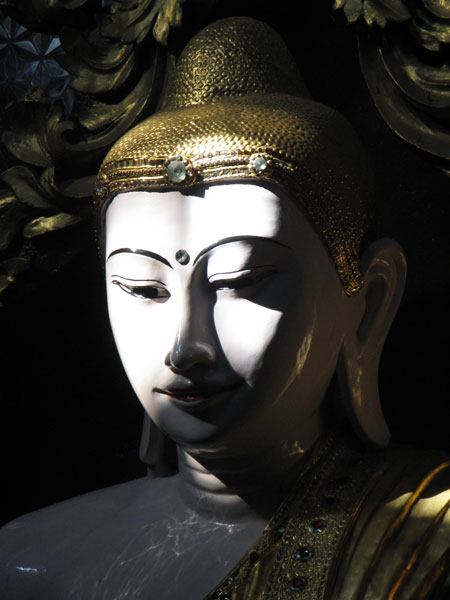
The sweetness of doing nothing can be found in calming the mind to allow our subconscious to evaluate thoughts, feeling and perceptions missed by our conscious state. One of my favorite things to do to bring about stillness is a walking meditation. During my walk, I keep to being a silent observer, refraining from labeling or judging anything I see. I no longer identify the trees, houses or people I see. I simply observe as though I am witnessing them for the first time. Without the mental designation, my gentle awareness picks up something within me. It is my soul percolating to the surface and a sense of calm fills my being. I am deeply aware of the sense of aliveness within my body. It is the feeling of being in the world but not of it. These meditative walks, from an external appearance seem to be ordinary. But my internal experience is filled with the extraordinary.
I invite you to choose to experience the art of nothingness next time you can. Enter into your stillness with as much joy and anticipation as you do any other action. Let yourself steep a little further into it’s sweetness and come out of the quiet with a view on life a little sweeter.
Kevin Joubert is the founder of Thoughts Unearthed.
Photo credit: Photography Blogger
Want to feel great every single week? NOW YOU CAN!

We have a complex relationship with the art of nothingness because it defies what our culture says is valuable. Our initial response to anything that does not add value to our resume or bolster our reputation is “why do it?” I believe that the ego has a real disdain for simple acts of being – meditation, self-reflection or relaxing walks because the mind is asked to quiet down. The ego is uncomfortable with the quiet, trying to convince you that the incessant commentary running through your head is a necessity. Even exercises like yoga, tai chi and qigong are refuted by the ego for their apparent lack of benefits.
The Italians have a fitting expression: il dolce far niente – the sweetness of doing nothing. Life is meant to be sweet but most of us are much too focused on the doing to enjoy it. We forget that the Universe and all that it contains rely on balance to sustain it. For every action, there is a reaction. To have hot, there must be the experience of cold. Yang must be balanced with yin. We forget that the micro (our bodies) is like the macro (the world). We need balance to be in harmony. With all of the focus on the active, it is no wonder that people find themselves feeling depleted, stressed out and overtaxed. The push for greater achievement creates an imbalance in our life. With such focus on doing, we may miss the opportunity and the necessity of rest. The value of nothingness lies in its ability to rejuvenate and replenish. It fuels the flow of Life by creating a space for the ebb.
When we take the time to reflect or contemplate – by way of slowing down and being mindful, we are better able to access a higher source of energy, insight and resolution. The very nature of nothing is like an empty cup, waiting to be filled. There will be times when it is beneficial, if not necessary to empty your cup consciously in order to make room for something else. Longer stretches of nothingness are like periods of incubation. The alchemical process of Life takes place in the yin aspect of your being in preparation for the outward, active expression of yang. In times of stillness, we can allow the divine to reorder our lives in extraordinary ways. God does not need your permission to change your life but in the active side of nothingness, we work in unison with the divine.
The sweetness of doing nothing can be found in calming the mind to allow our subconscious to evaluate thoughts, feeling and perceptions missed by our conscious state. One of my favorite things to do to bring about stillness is a walking meditation. During my walk, I keep to being a silent observer, refraining from labeling or judging anything I see. I no longer identify the trees, houses or people I see. I simply observe as though I am witnessing them for the first time. Without the mental designation, my gentle awareness picks up something within me. It is my soul percolating to the surface and a sense of calm fills my being. I am deeply aware of the sense of aliveness within my body. It is the feeling of being in the world but not of it. These meditative walks, from an external appearance seem to be ordinary. But my internal experience is filled with the extraordinary.
I invite you to choose to experience the art of nothingness next time you can. Enter into your stillness with as much joy and anticipation as you do any other action. Let yourself steep a little further into it’s sweetness and come out of the quiet with a view on life a little sweeter.
Kevin Joubert is the founder of Thoughts Unearthed.
Photo credit: Photography Blogger
Want to feel great every single week? NOW YOU CAN!
Wednesday, 22 February 2012
Speaking tree............
Je rab milda jungle phirana, taan rab milda gaavan bachhiyan nu....Je rab milda nathyan dhotyan, taan rab milda dadduan machhiyan nu..."----Bulle Shah
jab tak teri khudi naa toote
khuda nazar naa aayega
Become a verb and compress your noun to zero,
God is waiting .
It is easy to understand God as long as you don't try to explain him
jab tak teri khudi naa toote
khuda nazar naa aayega
Become a verb and compress your noun to zero,
God is waiting .
It is easy to understand God as long as you don't try to explain him
Thursday, 16 February 2012
Thursday, 9 February 2012
Karma theory in a different perspective
What makes you happy?
Money? The newest iPhone? The good health of your family? A promotion at work?
Some interesting work by University of California, Riverside researcher Sonja Lyubomirsky not only suggests where our happiness comes from, but shows how to get more of it.
Pieces of the happiness pie
Dr. Lyubomirsky proposes that there are three components to happiness:
A genetically-based “happiness set point”
Life circumstances
Intentional activities and practices.
She has broken these three areas into percentages regarding how much they are responsible for your happiness.
Although the variability of the happiness set point is currently undergoing more research, Lyubomirsky cites studies that indicate the set point is responsible for 50% of your overall happiness.
Life circumstances – things like the aforementioned iPhone, family health, and work promotion – account for only 10% of your happiness.
That leaves intentional activities aimed toward positive emotion providing you with 40% of your happiness quotient.
Now, here are a couple of important things to know:
Your happiness set point is genetic and therefore impervious to change. The theory is that no matter what happens – good or bad – you tend to eventually settle back into your inherited level of happiness. So, there’s no use trying to make an impact on your happiness set point.
You could try to improve your life circumstances by getting more stuff, striving for career goals, and finding the perfect partner. But not only do life circumstances only account for a small percentage of your happiness, they are subject to a very human process: hedonic adaptation. In a nutshell, this means that we very quickly adapt to new things in our lives, so our happiness about it is short-lived.
Taking action toward happiness
So that leaves us with intentional activities as the remaining piece of the happiness pie, a piece that creates 40% of our well-being. Lyubomirsky believes it is this component that we have the most control over and that allows us to take action rather than merely react when it comes to creating happiness.
So what are these activities that promote positive emotions and well-being? Lyubomirsky suggests three well-researched practices:
1. Committing acts of kindness. Doing nice things for others tends to up your happiness quotient. Curiously, Lyubomirsky found that doing several acts of kindness on the same day – rather than spreading them out through the week – generated the greatest jump in well-being.
2. Expressing gratitude and optimism. Keeping a list of things you are grateful for really does help make you happier. An intriguing note on this component is the discovery that making a list one time per week created a greater boost in happiness than making lists three or more times per week.
3. Processing happy and unhappy life experiences. This is where it really gets interesting. It turns out that talking or writing about your life experiences is helpful in only one of these conditions: the negative experiences.
Why? Apparently, talking to a friend or writing about difficult times in your life helps you to create a story and structure around the event, an act which helps you make sense of it and adjust to the experience more easily.
Positive experiences, however, generate more happiness if they are thought about privately. This allows you to savor and re-experience them without having to analyze them. It’s perfectly fine to talk with others about great things that happen to you as this will brighten your friend’s day, too. But be sure to remember and relish those good events in your life in your private time, too.
What makes you happy? Slice yourself a bigger piece of the happiness pie using intentional activities. You’ll be happy you did.
Psychotherapist Bobbi Emel specializes in helping people face life’s significant challenges and regain their resiliency. In addition to seeing clients in her private practice, Bobbi is a well-regarded speaker and writer. You can find her blog at http://www.TheBounceBlog.com
Money? The newest iPhone? The good health of your family? A promotion at work?
Some interesting work by University of California, Riverside researcher Sonja Lyubomirsky not only suggests where our happiness comes from, but shows how to get more of it.
Pieces of the happiness pie
Dr. Lyubomirsky proposes that there are three components to happiness:
A genetically-based “happiness set point”
Life circumstances
Intentional activities and practices.
She has broken these three areas into percentages regarding how much they are responsible for your happiness.
Although the variability of the happiness set point is currently undergoing more research, Lyubomirsky cites studies that indicate the set point is responsible for 50% of your overall happiness.
Life circumstances – things like the aforementioned iPhone, family health, and work promotion – account for only 10% of your happiness.
That leaves intentional activities aimed toward positive emotion providing you with 40% of your happiness quotient.
Now, here are a couple of important things to know:
Your happiness set point is genetic and therefore impervious to change. The theory is that no matter what happens – good or bad – you tend to eventually settle back into your inherited level of happiness. So, there’s no use trying to make an impact on your happiness set point.
You could try to improve your life circumstances by getting more stuff, striving for career goals, and finding the perfect partner. But not only do life circumstances only account for a small percentage of your happiness, they are subject to a very human process: hedonic adaptation. In a nutshell, this means that we very quickly adapt to new things in our lives, so our happiness about it is short-lived.
Taking action toward happiness
So that leaves us with intentional activities as the remaining piece of the happiness pie, a piece that creates 40% of our well-being. Lyubomirsky believes it is this component that we have the most control over and that allows us to take action rather than merely react when it comes to creating happiness.
So what are these activities that promote positive emotions and well-being? Lyubomirsky suggests three well-researched practices:
1. Committing acts of kindness. Doing nice things for others tends to up your happiness quotient. Curiously, Lyubomirsky found that doing several acts of kindness on the same day – rather than spreading them out through the week – generated the greatest jump in well-being.
2. Expressing gratitude and optimism. Keeping a list of things you are grateful for really does help make you happier. An intriguing note on this component is the discovery that making a list one time per week created a greater boost in happiness than making lists three or more times per week.
3. Processing happy and unhappy life experiences. This is where it really gets interesting. It turns out that talking or writing about your life experiences is helpful in only one of these conditions: the negative experiences.
Why? Apparently, talking to a friend or writing about difficult times in your life helps you to create a story and structure around the event, an act which helps you make sense of it and adjust to the experience more easily.
Positive experiences, however, generate more happiness if they are thought about privately. This allows you to savor and re-experience them without having to analyze them. It’s perfectly fine to talk with others about great things that happen to you as this will brighten your friend’s day, too. But be sure to remember and relish those good events in your life in your private time, too.
What makes you happy? Slice yourself a bigger piece of the happiness pie using intentional activities. You’ll be happy you did.
Psychotherapist Bobbi Emel specializes in helping people face life’s significant challenges and regain their resiliency. In addition to seeing clients in her private practice, Bobbi is a well-regarded speaker and writer. You can find her blog at http://www.TheBounceBlog.com

Sunday, 29 January 2012
Saturday, 21 January 2012
Pass it down the line..............
In 1982, British writer Bernard Hare was a student living just north of London, tells the story to inspire troubled young people to help deal with their disrupted lives.
The police called at my student hovel early evening, but I didn't answer as I thought they'd come to evict me. I hadn't paid my rent in months. But then I got to thinking: my mum hadn't been too good and what if it was something about her? We had no phone in the hovel and mobiles hadn't been invented yet, so I had to nip down the phone box.
I rang home to Leeds to find my mother was in hospital and not expected to survive the night. "Get home, son," my dad said. I got to the railway station to find I'd missed the last train. A train was going as far as Peterborough, but I would miss the connecting Leeds train by twenty minutes.
I bought a ticket home and got on anyway. I was a struggling student and didn't have the money for a taxi the whole way, but I had a screwdriver in my pocket and my bunch of skeleton keys. I was so desperate to get home that I planned to nick a car in Peterborough, hitch hike, steal some money, something, anything. I just knew from my dad's tone of voice that my mother was going to die that night and I intended to get home if it killed me.
"Tickets, please," I heard, as I stared blankly out of the window at the passing darkness. I fumbled for my ticket and gave it to the guard when he approached. He stamped it, but then just stood there looking at me. I'd been crying, had red eyes and must have looked a fright.
"You okay?" he asked.
"Course I'm okay," I said. "Why wouldn't I be? And what's it got to do with you in any case?"
"You look awful," he said. "Is there anything I can do?"
"You could get lost and mind your own business," I said. "That'd be a big help." I wasn't in the mood for talking.

He was only a little bloke and he must have read the danger signals in my body language and tone of voice, but he sat down opposite me anyway and continued to engage me.
"If there's a problem, I'm here to help. That's what I'm paid for."
I was a big bloke in my prime, so I thought for a second about physically sending him on his way, but somehow it didn't seem appropriate. He wasn't really doing much wrong. I was going through all the stages of grief at once: denial, anger, guilt, withdrawal, everything but acceptance. I was a bubbling cauldron of emotion and he had placed himself in my line of fire.
The only other thing I could think of to get rid of him was to tell him my story.
"Look, my mum's in hospital, dying, she won't survive the night, I'm going to miss the connection to Leeds at Peterborough, I'm not sure how I'm going to get home.
"It's tonight or never, I won't get another chance, I'm a bit upset, I don't really feel like talking, I'd be grateful if you'd leave me alone. Okay?"
"Okay," he said, finally getting up. "Sorry to hear that, son. I'll leave you alone then. Hope you make it home in time." Then he wandered off down the carriage back the way he came.
I continued to look out of the window at the dark. Ten minutes later, he was back at the side of my table. Oh no, I thought, here we go again. This time I really am going to rag him down the train. He touched my arm. "Listen, when we get to Peterborough, shoot straight over to Platform One as quick as you like. The Leeds train'll be there."
I looked at him dumbfounded. It wasn't really registering. "Come again," I said, stupidly. "What do you mean? Is it late, or something?"
"No, it isn't late," he said, defensively, as if he really cared whether trains were late or not. "No, I've just radioed Peterborough. They're going to hold the train up for you. As soon as you get on, it goes.
"Everyone will be complaining about how late it is, but let's not worry about that on this occasion. You'll get home and that's the main thing. Good luck and God bless."
Then he was off down the train again. "Tickets, please. Any more tickets now?"
I suddenly realised what a top-class, fully-fledged doilem I was and chased him down the train. I wanted to give him all the money from my wallet, my driver's licence, my keys, but I knew he would be offended.
I caught him up and grabbed his arm. "Oh, er, I just wanted to…" I was suddenly speechless. "I, erm…"
"It's okay," he said. "Not a problem." He had a warm smile on his face and true compassion in his eyes. He was a good man for its own sake and required nothing in return.
"I wish I had some way to thank you," I said. "I appreciate what you've done."
"Not a problem," he said again. "If you feel the need to thank me, the next time you see someone in trouble, you help them out. That will pay me back amply.
"Tell them to pay you back the same way and soon the world will be a better place."
I was at my mother's side when she died in the early hours of the morning. Even now, I can't think of her without remembering the Good Conductor on that late-night train to Peterborough and, to this day, I won't hear a bad word said about British Rail.
My meeting with the Good Conductor changed me from a selfish, potentially violent hedonist into a decent human being, but it took time.
"I've paid him back a thousand times since then," I tell the young people I work with, "and I'll keep on doing so till the day I die. You don't owe me nothing. Nothing at all."
"And if you think you do, I'd give you the same advice the Good Conductor gave me. Pass it down the line."
-BBC News Magazine.
The police called at my student hovel early evening, but I didn't answer as I thought they'd come to evict me. I hadn't paid my rent in months. But then I got to thinking: my mum hadn't been too good and what if it was something about her? We had no phone in the hovel and mobiles hadn't been invented yet, so I had to nip down the phone box.
I rang home to Leeds to find my mother was in hospital and not expected to survive the night. "Get home, son," my dad said. I got to the railway station to find I'd missed the last train. A train was going as far as Peterborough, but I would miss the connecting Leeds train by twenty minutes.
I bought a ticket home and got on anyway. I was a struggling student and didn't have the money for a taxi the whole way, but I had a screwdriver in my pocket and my bunch of skeleton keys. I was so desperate to get home that I planned to nick a car in Peterborough, hitch hike, steal some money, something, anything. I just knew from my dad's tone of voice that my mother was going to die that night and I intended to get home if it killed me.
"Tickets, please," I heard, as I stared blankly out of the window at the passing darkness. I fumbled for my ticket and gave it to the guard when he approached. He stamped it, but then just stood there looking at me. I'd been crying, had red eyes and must have looked a fright.
"You okay?" he asked.
"Course I'm okay," I said. "Why wouldn't I be? And what's it got to do with you in any case?"
"You look awful," he said. "Is there anything I can do?"
"You could get lost and mind your own business," I said. "That'd be a big help." I wasn't in the mood for talking.
He was only a little bloke and he must have read the danger signals in my body language and tone of voice, but he sat down opposite me anyway and continued to engage me.
"If there's a problem, I'm here to help. That's what I'm paid for."
I was a big bloke in my prime, so I thought for a second about physically sending him on his way, but somehow it didn't seem appropriate. He wasn't really doing much wrong. I was going through all the stages of grief at once: denial, anger, guilt, withdrawal, everything but acceptance. I was a bubbling cauldron of emotion and he had placed himself in my line of fire.
The only other thing I could think of to get rid of him was to tell him my story.
"Look, my mum's in hospital, dying, she won't survive the night, I'm going to miss the connection to Leeds at Peterborough, I'm not sure how I'm going to get home.
"It's tonight or never, I won't get another chance, I'm a bit upset, I don't really feel like talking, I'd be grateful if you'd leave me alone. Okay?"
"Okay," he said, finally getting up. "Sorry to hear that, son. I'll leave you alone then. Hope you make it home in time." Then he wandered off down the carriage back the way he came.
I continued to look out of the window at the dark. Ten minutes later, he was back at the side of my table. Oh no, I thought, here we go again. This time I really am going to rag him down the train. He touched my arm. "Listen, when we get to Peterborough, shoot straight over to Platform One as quick as you like. The Leeds train'll be there."
I looked at him dumbfounded. It wasn't really registering. "Come again," I said, stupidly. "What do you mean? Is it late, or something?"
"No, it isn't late," he said, defensively, as if he really cared whether trains were late or not. "No, I've just radioed Peterborough. They're going to hold the train up for you. As soon as you get on, it goes.
"Everyone will be complaining about how late it is, but let's not worry about that on this occasion. You'll get home and that's the main thing. Good luck and God bless."
Then he was off down the train again. "Tickets, please. Any more tickets now?"
I suddenly realised what a top-class, fully-fledged doilem I was and chased him down the train. I wanted to give him all the money from my wallet, my driver's licence, my keys, but I knew he would be offended.
I caught him up and grabbed his arm. "Oh, er, I just wanted to…" I was suddenly speechless. "I, erm…"
"It's okay," he said. "Not a problem." He had a warm smile on his face and true compassion in his eyes. He was a good man for its own sake and required nothing in return.
"I wish I had some way to thank you," I said. "I appreciate what you've done."
"Not a problem," he said again. "If you feel the need to thank me, the next time you see someone in trouble, you help them out. That will pay me back amply.
"Tell them to pay you back the same way and soon the world will be a better place."
I was at my mother's side when she died in the early hours of the morning. Even now, I can't think of her without remembering the Good Conductor on that late-night train to Peterborough and, to this day, I won't hear a bad word said about British Rail.
My meeting with the Good Conductor changed me from a selfish, potentially violent hedonist into a decent human being, but it took time.
"I've paid him back a thousand times since then," I tell the young people I work with, "and I'll keep on doing so till the day I die. You don't owe me nothing. Nothing at all."
"And if you think you do, I'd give you the same advice the Good Conductor gave me. Pass it down the line."
-BBC News Magazine.
Thursday, 12 January 2012
Saturday, 31 December 2011
Secrecy Begets Success
Trading is just like any other business - more the secrecy, more the success.

Can trading be considered for a living...as a profession..as a major source of income..?
It is a definite yes. But then, Can you derive your major source of income as a professional sportsperson..? Yes, but you need to put in a tremendous amount of time, discipline, hard work and above all a lot of patience.
Just like in any other business, if you have a winning formula, stick to it. Do it consistently. You go around the "Temple City - Madurai" and live there for 24 hours, you could become a better trader watching those "ant like" nature of people there. They don't miss a thing when it comes to making money. Their enthusiasm is quite infective. Their hard work is quite admirable. Most of the street vendors have "never say die" attitude. I guess, all the traders are alike. If someone can make his living out of a 1000- 5000 Rs capital taking enormous risk on the street, Traders in dalal Street too can. If they fail, they have only themselves to blame and no one else. Traders on the street don't repeat their mistakes because they know the hard realities. Traders in dalal street generally have casual approach to "money making" and tend to repeat theirs.
So Change that approach, you can get rich slowly and steadily. Wait for those opportune moment to make your winnings. Play it low during corrections as NO ONE can get that right while it is on but go full throttle once the trend is clear. Leave the intelligence at home, just follow the market like a herd .. Doubters can never make it. Believe in yourself, your own past experience will provide riches unimaginable.
Know your trade..So learn all the basics and methods and leave them to the analysts. Use only that works for you.
Consistent work, patience and a calm temperament and sticking to your plan/ method is a sure shot to Success. Talk less about your trades - Secrecy begets success.
(Live with a trader's family and know that they are so easy going with the life but "steadfast in their seriousness to their trade")
Can trading be considered for a living...as a profession..as a major source of income..?
It is a definite yes. But then, Can you derive your major source of income as a professional sportsperson..? Yes, but you need to put in a tremendous amount of time, discipline, hard work and above all a lot of patience.
Just like in any other business, if you have a winning formula, stick to it. Do it consistently. You go around the "Temple City - Madurai" and live there for 24 hours, you could become a better trader watching those "ant like" nature of people there. They don't miss a thing when it comes to making money. Their enthusiasm is quite infective. Their hard work is quite admirable. Most of the street vendors have "never say die" attitude. I guess, all the traders are alike. If someone can make his living out of a 1000- 5000 Rs capital taking enormous risk on the street, Traders in dalal Street too can. If they fail, they have only themselves to blame and no one else. Traders on the street don't repeat their mistakes because they know the hard realities. Traders in dalal street generally have casual approach to "money making" and tend to repeat theirs.
So Change that approach, you can get rich slowly and steadily. Wait for those opportune moment to make your winnings. Play it low during corrections as NO ONE can get that right while it is on but go full throttle once the trend is clear. Leave the intelligence at home, just follow the market like a herd .. Doubters can never make it. Believe in yourself, your own past experience will provide riches unimaginable.
Know your trade..So learn all the basics and methods and leave them to the analysts. Use only that works for you.
Consistent work, patience and a calm temperament and sticking to your plan/ method is a sure shot to Success. Talk less about your trades - Secrecy begets success.
(Live with a trader's family and know that they are so easy going with the life but "steadfast in their seriousness to their trade")
Sunday, 18 December 2011
Growth through Vishnu

Tantra uses geometrical patterns to communicate wisdom. A dot, the most elemental geometrical pattern, like a woman’s bindi, represents potential. Lines swept horizontally, seen on Shiva’s forehead represent death and destruction. A vertical line stretched upwards, the tilak, as on Vishnu’s forehead, represents growth. At face value, the path of Shiva and the path of Vishnu seem to be the opposite of each other. Shiva, the hermit, favors renunciation. Vishnu, the king, favors growth. But before one jumps to this convenient conclusion, one must notice something peculiar about Vishnu’s sacred mark.
Vishnu’s tilak, stretching upwards, is located with a deep cup made of sandal paste. The tilak, in red paste, represents material growth, no doubt. But the cup of sandal paste anchors this growth with intellectual and emotional growth. And this can only happen when one is willing to ‘destroy’ fears that inhibit intellectual and emotional growth, fears that stir our animal instincts of survival, of territoriality, of domination and control, and prevent us from being human.
That the sacred marks of India, whether a dot or a horizontal line or a vertical line painted on the forehead is significant. It reminds us of the one organ that humans have that no other creature on earth possess, the neo-frontal cortex, located just behind the forehead, one that allows us to imagine. Imagination can amplify animal fears and make us worse than animals. When we behave like frightened animals, despite having the human advantage, then our behavior is deemed adharma. When we use our imagination to outgrow our fear, grow intellectually and emotionally to empathize and include others, it is dharma.
Modern management speaks of growth only in material terms. In other words, growth of Lakshmi alone. But traditional Indian wisdom is wary of this. With Lakshmi comes her sister, Alakshmi, the goddess of quarrels. To prevent this, Lakshmi must be accompanied by Saraswati, the goddess who makes us wise, and Durga, the goddess who can make us secure. Unless wealth is accompanied with wisdom and emotional security, society will, beneath the veneer of civilization, continue to be ravaged by the law of the jungle.
Sankirtan became a CEO after twenty years of struggle. And he knew that unless the balance sheet showed a positive trend in the next two years, he would be kicked out by the Board of Directors. He had to grow at any cost. It was a question of survival, and so he drove his people up the wall, with demands and late working hours and tight control of expenses. Everybody called him ruthless and ambitious and greedy. He achieved what he set out to achieve in three years, not two, but the directors figured out he was good for the business.
In the following year, based on trends and market forecasts, the directors demanded an 8% growth. This would demand further controls, further pressure, more late nights and ruthless reviews. This is where Sankirtan challenged the Board. “Maybe a slightly lower target, maybe 7%. Our survival is no longer at stake. We can use our resources to make life a little better for our team and our vendors. Give a better salary hike, better bonuses, be a little more flexible with processes and controls. We need to focus on quality of life.” The Board snarled, “Why can’t you give this with 8% growth? No compromises on target. No compromises on topline and bottom line. People will adapt.”
With this display of belligerence, Sankirtan realized his Board cared only for Lakshmi. No room for Saraswati and Durga here, he realized. Clearly, they did not care for him, only the money he brought in. These were not people who cared for the organization, only their pockets. So when he went home that night, he picked up the phone and spoke to the headhunter. He expressed his interest in the job offer that made him 60% more. The current job did not make him feel secure and happy any more. His vertical line had just turned horizontal.
Desireless attain all desires........Having comes from being
It is an irony of the world that the people who seek material things and desire to have them before thinking about enlightenment, tend to attain neither, but those that acquire enlightenment first are the ones who do.

The desireless attain all their desires.
Being desireless is not about having no desire, but it is about having no attachment to desire. Attachment is the cause of all suffering. Suffering is burning emotional energy on the uncontrollable.The more you suffer, the more suffering you attract.
Letting go of all attachments is the way to end all suffering.
When you are attached, you are in a state of wanting or lacking. When you are detached, you are in a state of being desireless. Enlightenment is about knowing why detachment gets you your desire.
Physical reality is an illusion created by consciousness to rediscover itself. It is an illusion that you do not have what you already want, because you already have all that you desire in spiritual reality. Physical reality is a place for you to manifest anything that you are resonating with from spiritual reality. When you are attached, you are resonating with the spiritual untruth that you do not have your desire.
When you are detached, you are resonating with the spiritual truth that you already have your desire. You free yourself by being emotionally detached from choices. Many people fail to get what they want because they do not free themselves to have it.
You trap yourself when you are attached to choices. You think that it has to work a particular way rather than allowing yourself to go another way. Detachment from choices is what gives you true freedom of choice. You are able to choose again in every moment and are free to make a different choice if you will.
Detachment from choice is secret of flexibility.
Stock market trading success comes to those who trade in an enlightened way. The masses are emotionally attached to choices and that is why they lose money when they hold on to failing stocks instead of selling them. They also fail to sell when the stock has reached a substantial level of growth because they are attached to seeing it grow forever.
The elite traders are not attached to choices but they buy and sell freely in a way that makes them more money than losing it. To be unattached is to be free.
Having the relationships you want also comes from being enlightened. What a woman really wants is an enlightened man. He is a man who realizes his true being as a free spirit. He is free to express himself to her and he is free from being affected by her.
Being detached is the attractive quality that makes a man uncontrollable by a lady. Being undefined by external factors is what makes him self assured. He is capable of loving fearlessly and loving without attachment. Enlightened loving is loving like a god.

Those who are enlightened get what they want by benefiting from movement and changes, whether positive or negative. It no longer matters to them whether the stock goes up or down. They have strategies to make money either way. It no longer matters to them whether which person likes or don't like them, or when their partner is happy or unhappy with them. They simply allow themselves to enjoy all the happiness and positive energy they experience from whoever, whenever and however it comes.
Enlightened manifestation of your desires is about getting the essence of what you want and not being attached to the form or channel. Those who are attached to form or channel will suffer more and more, and have less and less self esteem. Whereas those who are not attached will be able to enjoy more and more of the things they like in life, and have more and more self esteem.
Those who have more self esteem are more capable of having the success and relationships they want compared to the others.
Freedom from attachment is also the reason why the rich get richer and the happy
get happier, while the poor get poorer and the unhappy get unhappier. Having comes from being. When you are being detached, you are resonating with having. When you are being attached, you are resonating with not having.

That is why it has always been said that you will finally be able to have what you want when you no longer want it. It does not mean you do not want it, but you are no longer in a state of wanting it.
All that we want is peace and bliss. We think that when we have all the material things we want, we will have peace and bliss. But that is because we don't really know what peace and bliss are. It is peace and bliss that bring us everything else in life.
Peace is total transcendence. Bliss is an untouchable happiness. When we transcend all illusions of the material world, we are in a state of peace where we can manifest anything we want. When we have no attachments, we have a happiness that cannot go.
Enlightenment is the key to everything. The unenlightened may ask what enlightenment has got to do with making the money or getting the girl that you want. The answer is everything. When you are enlightened, you realize that it is not about getting this or that, but it is all about knowing what reality is, and who you really are. Then from that space of knowingness and beingness, you are free to create whatever you wish.
You're free to play with illusions without being trapped by any, as it is all just a game.
Source: Enoch Tan.

The desireless attain all their desires.
Being desireless is not about having no desire, but it is about having no attachment to desire. Attachment is the cause of all suffering. Suffering is burning emotional energy on the uncontrollable.The more you suffer, the more suffering you attract.
Letting go of all attachments is the way to end all suffering.
When you are attached, you are in a state of wanting or lacking. When you are detached, you are in a state of being desireless. Enlightenment is about knowing why detachment gets you your desire.
Physical reality is an illusion created by consciousness to rediscover itself. It is an illusion that you do not have what you already want, because you already have all that you desire in spiritual reality. Physical reality is a place for you to manifest anything that you are resonating with from spiritual reality. When you are attached, you are resonating with the spiritual untruth that you do not have your desire.
When you are detached, you are resonating with the spiritual truth that you already have your desire. You free yourself by being emotionally detached from choices. Many people fail to get what they want because they do not free themselves to have it.
You trap yourself when you are attached to choices. You think that it has to work a particular way rather than allowing yourself to go another way. Detachment from choices is what gives you true freedom of choice. You are able to choose again in every moment and are free to make a different choice if you will.
Detachment from choice is secret of flexibility.
Stock market trading success comes to those who trade in an enlightened way. The masses are emotionally attached to choices and that is why they lose money when they hold on to failing stocks instead of selling them. They also fail to sell when the stock has reached a substantial level of growth because they are attached to seeing it grow forever.
The elite traders are not attached to choices but they buy and sell freely in a way that makes them more money than losing it. To be unattached is to be free.
Having the relationships you want also comes from being enlightened. What a woman really wants is an enlightened man. He is a man who realizes his true being as a free spirit. He is free to express himself to her and he is free from being affected by her.
Being detached is the attractive quality that makes a man uncontrollable by a lady. Being undefined by external factors is what makes him self assured. He is capable of loving fearlessly and loving without attachment. Enlightened loving is loving like a god.

Those who are enlightened get what they want by benefiting from movement and changes, whether positive or negative. It no longer matters to them whether the stock goes up or down. They have strategies to make money either way. It no longer matters to them whether which person likes or don't like them, or when their partner is happy or unhappy with them. They simply allow themselves to enjoy all the happiness and positive energy they experience from whoever, whenever and however it comes.
Enlightened manifestation of your desires is about getting the essence of what you want and not being attached to the form or channel. Those who are attached to form or channel will suffer more and more, and have less and less self esteem. Whereas those who are not attached will be able to enjoy more and more of the things they like in life, and have more and more self esteem.
Those who have more self esteem are more capable of having the success and relationships they want compared to the others.
Freedom from attachment is also the reason why the rich get richer and the happy
get happier, while the poor get poorer and the unhappy get unhappier. Having comes from being. When you are being detached, you are resonating with having. When you are being attached, you are resonating with not having.

That is why it has always been said that you will finally be able to have what you want when you no longer want it. It does not mean you do not want it, but you are no longer in a state of wanting it.
All that we want is peace and bliss. We think that when we have all the material things we want, we will have peace and bliss. But that is because we don't really know what peace and bliss are. It is peace and bliss that bring us everything else in life.
Peace is total transcendence. Bliss is an untouchable happiness. When we transcend all illusions of the material world, we are in a state of peace where we can manifest anything we want. When we have no attachments, we have a happiness that cannot go.
Enlightenment is the key to everything. The unenlightened may ask what enlightenment has got to do with making the money or getting the girl that you want. The answer is everything. When you are enlightened, you realize that it is not about getting this or that, but it is all about knowing what reality is, and who you really are. Then from that space of knowingness and beingness, you are free to create whatever you wish.
You're free to play with illusions without being trapped by any, as it is all just a game.
Source: Enoch Tan.
ZEN
When you are under the clouds of sadness, even if you recite a mantra and pray, you are sometimes not able to lift yourself out of that feeling. In those moments, where is all the wisdom? It remains in a corner. Though our heads are filled with a lot of quotations, do we use them when we are under the influence of sorrow? Mostly, we do not. Though we have read books on how to be happy, do they help us? Apparently often not. It seems that we are only able to use their wisdom when we are in a good mood. It is most important that we learn to call upon our knowledge and insights to sustain us when we are in a low state.
Why don't we use our knowledge? Because knowledge and emotion work in different directions. For eg, we know that anyone who comes into our life is eventually going to go and all are on a journey, coming and going, but when that event happens in our life, how do we take it? Sadness envelops due to emotional reactions. Intellectually we understand, but emotionally we succumb to the events. Meditation helps us bring that knowledge into our emotions. With this change in perception, we become ready to meet any challenge. Nothing comes as a shock or a surprise. Understanding has been absorbed into our experience. Thus we become aware.
The wise person lives in the world, but not of it. He lives with complete awareness.
There is a Zen story which illustrates this. Once there was a famous swordsman who was on his deathbed when his son asked him, "What is your last wish, father?"
His father answered, "Oh, Matajura, my son, I had a dream to see you become the greatest of swordsmen, but I failed." Matajura told him, "And I also wanted to become that, but the right teacher could not be found, and you also had no time to teach me."
Then his father said, "This wish is so strong that I am going to live three more years to see that it is fulfilled. Though I am on my deathbed, I shall not die."
So his son asked, "Who shall be my teacher?" His father sent him to Banzo, who was known to be the master at that time.
The boy went to Banzo and bowed and said, "I want to study with you and become a skilled swordsman. I am willing to devote myself completely to this task. How long will it take for me to master the art"
The master answered, "Ten years."
"Ten years?" The boy was incredulous. "Suppose I use every moment of my day and allow for only three hours' sleep, then how long will it take?"
"Then it may take thirty years!" The boy did not understand.
"How is that?" asked Matajura. "First you say ten years. Then when I offer to work twice as hard, you say it will take three times as long. Let me make myself clear: I will work unceasingly: no hardship will be too much. How long will it take?"
"Sixty years," said Banzo. "A pupil in such a hurry learns slowly."
Master then explained, "One who is in haste and keeps his eye only on the result and not on the process gets no result. I teach not for result but for life. Master swordsmanship means to be vigilant, to know how not to kill and yet how to protect oneself. You must know that in the sword there is no friendly edge. If I teach only for result, you will be sliced. What for? I care more for the welfare of your life."
Now the boy understood. He told the master, "Sir, I drop the idea of timing. I request that you accept me as your student. I will become the vessel to receive wisdom from you."
From that day, he was accepted as the master's student. Now that his mind was calm, he was to receive a special training in awareness. The first part of the training was to do many kinds of service for his teacher. He washed his clothes, gardened, prepared food for him kept the swords in order, and took care of many other things. In six months, he was not given a single moment to learn how to hold or use the sword, but he developed patience.
One day while he was gardening, his teacher came and hit him with a wooden sword. He told him, "From today I will come unexpectedly. If you are aware, I will not hit you. If you are not aware, I will strike you. Harder blows are to come.
"Yes, sir," the student answered. He was very serious and eager to learn. He knew, "My teacher is harsh in appearance but soft in feeling. I don't know why he is hurting me, but he must have some good intention."
Soon the student began to be ready for a blow to come from any direction and at any time. Before the teacher came, he would know it. In this way, he became constantly alert and prepared for anything. As soon as the master put his hand on his sheath, the student would become aware and look up at him.
After that, his teacher told him, "Now starts the second part of your training. I will come at night. If you do not awaken, I will hit you." Each night the student would know even before the teacher appeared. Day and night he was alert. He became a body with no desires. His whole being was nothing but vigilance.
After two years, one night the master came not to hit him, but to smile at him and praise him. "Now you are the best swordsman!"
"But you have not taught me!" protested his student.
"To practice the sword is not a big thing," the master explained. "I can teach you that in a short time, but to be aware of which direction the sword is coming from, that is the main thing. To be vigilant, that is greatness. To overcome impulses, habits, and inertia, that is real mastery.Now go anywhere in the world. Nothing will cover you, for even deep sleep does not make you slumber. My mission to teach you is over. It was to make you aware."
In life, events come, vibrations hit us, karmas from the past give us blows. If we are not aware, they can throw us off balance. But if we are aware, we meet them as challenges. We meet them with the infinite source of strength hidden within us. We must come to know that strength. How do we come to know it? Through awareness of life.Our awareness must be built on reverence for life. Then all actions are directed from that reverence.
Nothing fetters or binds the person who is aware. Working, sleeping, eating, communicating, you are aware of everything you do as an act of reverence and love, honoring the one within who knows and is vigilant. Then whatever you do is for your growth and freedom. You do it without becoming attached or identified with the action. You see that your motive is pure, just to be, just to evolve, just to live and help others to live. In this way, you free yourself from the spell of greed and other mass values, and you feel the power and joy of self-mastery.
Why don't we use our knowledge? Because knowledge and emotion work in different directions. For eg, we know that anyone who comes into our life is eventually going to go and all are on a journey, coming and going, but when that event happens in our life, how do we take it? Sadness envelops due to emotional reactions. Intellectually we understand, but emotionally we succumb to the events. Meditation helps us bring that knowledge into our emotions. With this change in perception, we become ready to meet any challenge. Nothing comes as a shock or a surprise. Understanding has been absorbed into our experience. Thus we become aware.
The wise person lives in the world, but not of it. He lives with complete awareness.
There is a Zen story which illustrates this. Once there was a famous swordsman who was on his deathbed when his son asked him, "What is your last wish, father?"
His father answered, "Oh, Matajura, my son, I had a dream to see you become the greatest of swordsmen, but I failed."

Then his father said, "This wish is so strong that I am going to live three more years to see that it is fulfilled. Though I am on my deathbed, I shall not die."
So his son asked, "Who shall be my teacher?" His father sent him to Banzo, who was known to be the master at that time.
The boy went to Banzo and bowed and said, "I want to study with you and become a skilled swordsman. I am willing to devote myself completely to this task. How long will it take for me to master the art"
The master answered, "Ten years."
"Ten years?" The boy was incredulous. "Suppose I use every moment of my day and allow for only three hours' sleep, then how long will it take?"
"Then it may take thirty years!" The boy did not understand.
"How is that?" asked Matajura. "First you say ten years. Then when I offer to work twice as hard, you say it will take three times as long. Let me make myself clear: I will work unceasingly: no hardship will be too much. How long will it take?"
"Sixty years," said Banzo. "A pupil in such a hurry learns slowly."
Master then explained, "One who is in haste and keeps his eye only on the result and not on the process gets no result. I teach not for result but for life. Master swordsmanship means to be vigilant, to know how not to kill and yet how to protect oneself. You must know that in the sword there is no friendly edge. If I teach only for result, you will be sliced. What for? I care more for the welfare of your life."
Now the boy understood. He told the master, "Sir, I drop the idea of timing. I request that you accept me as your student. I will become the vessel to receive wisdom from you."
From that day, he was accepted as the master's student. Now that his mind was calm, he was to receive a special training in awareness. The first part of the training was to do many kinds of service for his teacher. He washed his clothes, gardened, prepared food for him kept the swords in order, and took care of many other things. In six months, he was not given a single moment to learn how to hold or use the sword, but he developed patience.
One day while he was gardening, his teacher came and hit him with a wooden sword. He told him, "From today I will come unexpectedly. If you are aware, I will not hit you. If you are not aware, I will strike you. Harder blows are to come.
"Yes, sir," the student answered. He was very serious and eager to learn. He knew, "My teacher is harsh in appearance but soft in feeling. I don't know why he is hurting me, but he must have some good intention."
Soon the student began to be ready for a blow to come from any direction and at any time. Before the teacher came, he would know it. In this way, he became constantly alert and prepared for anything. As soon as the master put his hand on his sheath, the student would become aware and look up at him.
After that, his teacher told him, "Now starts the second part of your training. I will come at night. If you do not awaken, I will hit you." Each night the student would know even before the teacher appeared. Day and night he was alert. He became a body with no desires. His whole being was nothing but vigilance.
After two years, one night the master came not to hit him, but to smile at him and praise him. "Now you are the best swordsman!"
"But you have not taught me!" protested his student.
"To practice the sword is not a big thing," the master explained. "I can teach you that in a short time, but to be aware of which direction the sword is coming from, that is the main thing. To be vigilant, that is greatness.

In life, events come, vibrations hit us, karmas from the past give us blows. If we are not aware, they can throw us off balance. But if we are aware, we meet them as challenges. We meet them with the infinite source of strength hidden within us. We must come to know that strength. How do we come to know it? Through awareness of life.Our awareness must be built on reverence for life. Then all actions are directed from that reverence.
Nothing fetters or binds the person who is aware. Working, sleeping, eating, communicating, you are aware of everything you do as an act of reverence and love, honoring the one within who knows and is vigilant. Then whatever you do is for your growth and freedom. You do it without becoming attached or identified with the action. You see that your motive is pure, just to be, just to evolve, just to live and help others to live. In this way, you free yourself from the spell of greed and other mass values, and you feel the power and joy of self-mastery.
Source: Lead by rrknan & more from Jain teachings.
Subscribe to:
Posts (Atom)