Showing posts with label History. Show all posts

Thursday, 20 December 2012

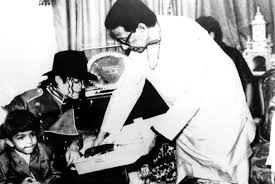
Bal Thackeray


Bal Thackeray, Mumbai’s political godfather, died on November 17th, aged 86


THE fight began in earnest in 1966, when Bal Thackeray and 17 others split a coconut at his family house by Shivaji Park, in Mumbai, to mark the birth of a political movement. His frail dad, hunched over his Marathi-language typewriter, conjured up a suitably martial name: Shiv Sena, the army of Shiva. They pledged to fight for the downtrodden Hindu indigenes of Maharashtra, the state that lies around the heaving financial hub of Mumbai.
In Shivaji Park 46 years later Bal was cremated on a pyre, still wearing his large square sunglasses, before a crowd that was claimed to be one of India’s largest since independence. He had often contemplated his own assassination, gleefully predicting that the whole country would go up in flames. Even after his natural death there was drama enough. Politicians, celebrities and tycoons fought for seats in the VIP enclosure. A city of 18m people came to a nervous standstill for the Tiger of Mumbai. 

His was a life, he said, that no astrologer had predicted. His mother wanted him to be a government servant; his father forced musical instruments into his hands. Bal settled on cartoons. He copied the strips in the Times of India for practice, and soon began drawing for the Free Press Journal. When it censored his outrageous output, he strode off, declaring: “I have a mind and nobody can change it.” Soon enough, all Mumbai learned the truth of that.
 
He started his own cartoon weekly to document the injustices faced by Maharashtrians, “the sons of the soil”. They were, he believed, second-class citizens in their own city. The tycoons, in their swanky palaces, came from outside: Gujaratis, Rajasthanis, Parsis. White-collar positions went to English-speakers, Iyers, Shahs and the rest: you could search in vain in an official phone directory for a single Marathi name. And every day he saw the city fill with migrant scum from all over India who stole jobs, picked pockets and used the street as a toilet.
He drew these things at first in his David Low style, but then he discovered oratory. By God, he was something in his prime. Stick-thin, but surrounded by armed men and images of roaring tigers, he would tell the crowds they were lucky not to be circumcised, that he would settle the border row with Pakistan in a day, that he would hand out Sten guns. His blood boiled inside him. Sometimes his tongue would lash the crowd itself. They still loved him. If they smashed shops or broke heads afterwards, so what?
The formula worked instantly. Shiv Sena won control of Mumbai’s two big councils in 1967 and 1973. After that Bal adapted its philosophy at will. At different points he was against Communist vermin, then idle Southern Indians, then Muslim filth. He loved God, then renounced Him when his wife died. He formed alliances with everyone—the Muslim League, Hindu nationalists, even the left-wing Congress party to break the trade unions. And he was equally prepared to let them all rot.
Power was what the Tiger was after, but of a certain kind. He never held office, and had no interest in being Maharashtra’s chief minister. Instead, he made sure the minister was his puppet. “I am the remote control,” he used to say. Decisions, like cartoons, needed to come from the gut. Not for him tricky questions of sanitation or finance. He preferred wild political gimmicks, from trying to ban Valentine’s Day to marvelling at the “magic” Hitler had.
But what he loved best was to dispense favours from his bungalow, crawling with security men and flickering with the Bollywood videos he loved, or from Shiv Sena’s headquarters, its walls adorned with his drawings and holograms of him on thrones with tigers. Supplicants would kneel and he, sometimes puffing on a choice Cohiba cigar, would deliver. When a sports star needed a house, Bal would provide it. If Bollywood producers struggled to get their films distributed, he would threaten retribution. He was chummy with tycoons, but if a son of the soil lost his job there would soon be a strike called and a mob outside the factory.
His glory years came when religious riots, claiming more than 1,000 lives, tore through Mumbai in the early 1990s. Support for Shiv Sena soared, and it won state elections. An inquiry later found that his party had orchestrated anti-Muslim violence. The Tiger evaded prosecution.
The skyscrapers’ shadow
He was untouchable; but, in truth, his health was going by then. He had left perhaps nothing durable, except the change of the city’s name to Mumbai from Bombay. His son Uddhav, who lived upstairs, took over day-to-day control of the party but was a lightweight. His nephew was a pale shadow of him. There was a gloomy sense that Mumbai had changed. Migration after the 1990s meant that Maharashtrians now made up only a third of the population.
India’s transformation was visible from where he died, north of Shivaji Park, where the logo of an Italian insurance firm loomed large. In the park itself, skyscrapers now cast shadows on the hard soil. Nonetheless, if Bal could have seen his own state funeral he would have much enjoyed it: the VIPs still just terrified enough to pay insincere homage to him; and the vast adoring crowd, still ignorant, still biddable, watching everything he had told them to believe in turning to ash.


Wednesday, 19 December 2012

Mig

The development department of Mikoyan and Gurevich (MiG) was created in the end of the 1930s, when the Soviet air forces needed fighters with speed of at least 600 km / h and powerful weapons. In 1941 up to twenty five units of MiG-3 was produced daily. By the beginning of WWII MiGs became the most popular type of new generation fighter aircrafts of the Soviet Air Forces.

Wednesday, 4 April 2012

Ring a Ring a Roses -the truth

The Truth Behind Nursery Rhymes.......................................
Ring a ring a roses, A pocket full of poses
A tishoo, A tishoo
We all fall down


The Great Plague was an illness and it killed millions of people in Europe in the seventeenth century. One of the signs of the illness was a circle of red marks. They looked like roses, and that explains the first line of the song.
In the second line, "poses" are small bunches of flowers. People carried flowers because of the smell of the Plague. "A tishoo" is the sound of a sneeze. That was another sign of the Plague. Then after a few days people "fell down" or died.
Another
Ring-around-a-Rosie = People with plague would hang roses around their heads.
Pockets full of posies = They would stuff their pockets with posies.
Ashes-Ashes = They burned the bodies so the disease did not spread.
We all fall down = (Dead)

The Last Post


The Last Post
.
If you have ever been to a military funeral, you would remember ‘The Last Post’ which was played. This note of mine may bring out a new meaning of it and it is surely something which everybody should know.

Some of us may have heard the song, 'The Last Post'. It's a song that gives me a lump in the throat and usually tears in my eyes.


Let me take you guys thru the story behind this.


Reportedly, it all began in 1862 during the American Civil War, when Union Army Captain Robert Ellicombe was with his men near Harrison's Landing in Virginia . The Confederate Army was on the other side of the narrow strip of land.

During the night, Captain Ellicombe heard the moans of a soldier who lay severely wounded on the field. Not knowing if it was a Union or Confederate soldier, the Captain decided to risk his life and bring the stricken man back for medical attention. Crawling on his stomach through thegunfire, the Captain reached the stricken soldier and began pulling him toward his encampment.

When the Captain finally reached his own lines, he discovered it was actually a Confederate soldier, but the soldier was dead.

The Captain lit a lantern and suddenly caught his breath and went numb with shock. In the dim light, he saw the face of the soldier. It was his son.The boy had been studying music in the South when the war broke out. Without telling his father, the boy enlisted in the Confederate Army.

The following morning, heartbroken, the father asked permission of his superiors to give his son a full military burial, despite his enemy status. His request was only partially granted.

The Captain had asked if he could have a group of Army band members play a funeral dirge for his son at the funeral. The request was turned down since the soldier was a Confederate.

But, out of respect for the father, they did say they could give him only one musician. The Captain chose a bugler. He asked the bugler to play a series of musical notes he had found on a piece of paper in the pocket of the dead youth's uniform.

This wish was granted.

This is how the haunting melody, we now know as 'The Last Post', used at military funerals was born.

The Last Post
.
If you have ever been to a military funeral, you would remember ‘The Last Post’ which was played. This note of mine may bring out a new meaning of it and it is surely something which everybody should know.

Some of us may have heard the song, 'The Last Post'. It's a song that gives me a lump in the throat and usually tears in my eyes.


Let me take you guys thru the story behind this.


Reportedly, it all began in 1862 during the American Civil War, when Union Army Captain Robert Ellicombe was with his men near Harrison's Landing in Virginia . The Confederate Army was on the other side of the narrow strip of land.

During the night, Captain Ellicombe heard the moans of a soldier who lay severely wounded on the field. Not knowing if it was a Union or Confederate soldier, the Captain decided to risk his life and bring the stricken man back for medical attention. Crawling on his stomach through thegunfire, the Captain reached the stricken soldier and began pulling him toward his encampment.

When the Captain finally reached his own lines, he discovered it was actually a Confederate soldier, but the soldier was dead.

The Captain lit a lantern and suddenly caught his breath and went numb with shock. In the dim light, he saw the face of the soldier. It was his son.The boy had been studying music in the South when the war broke out. Without telling his father, the boy enlisted in the Confederate Army.

The following morning, heartbroken, the father asked permission of his superiors to give his son a full military burial, despite his enemy status. His request was only partially granted.

The Captain had asked if he could have a group of Army band members play a funeral dirge for his son at the funeral. The request was turned down since the soldier was a Confederate.

But, out of respect for the father, they did say they could give him only one musician. The Captain chose a bugler. He asked the bugler to play a series of musical notes he had found on a piece of paper in the pocket of the dead youth's uniform.

This wish was granted.

This is how the haunting melody, we now know as 'The Last Post', used at military funerals was born.


The words are:


Day is done.

Gone the sun.

From the lakes.

From the hills.

From the sky.

All is well.

Safely rest.

God is nigh.

-------

Fading light.

Dims the sight.

And a star.

Gems the sky.

Gleaming bright.

From afar.

Drawing nigh.

Falls the night.

-------

Thanks and praise.

For our days.

Neath the sun

Neath the stars.

Neath the sky

As we go.

This we know.

God is nigh


The words are:


Day is done.

Gone the sun.

From the lakes.

From the hills.

From the sky.

All is well.

Safely rest.

God is nigh.

-------

Fading light.

Dims the sight.

And a star.

Gems the sky.

Gleaming bright.

From afar.

Drawing nigh.

Falls the night.

-------

Thanks and praise.

For our days.

Neath the sun

Neath the stars.

Neath the sky

As we go.

This we know.

God is nigh

Wednesday, 22 February 2012

Chakravarti Ashoka


Ashoka (Devanāgarī: अशोक, IASTAśokaIPA: [aˈɕoːkə], ca. 304–232 BC), also known as Ashoka the Great, was an Indian emperor of theMaurya Dynasty who ruled almost all of the Indian subcontinent from ca. 269 BC to 232 BC.[1] One of India's greatest emperors, Ashoka reigned over most of present-day India after a number of military conquests. His empire stretched from present-day Pakistan and Afghanistanin the west, to the present-day Bangladesh and the Indian state of Assam in the east, and as far south as northern Kerala and Andhra Pradesh. He conquered the kingdom named Kalinga, which none of his ancestors had conquered starting from Chandragupta Maurya. His reign was headquartered in Magadha (present-day Bihar). He embraced Buddhism after witnessing the mass deaths of the Kalinga War, which he himself had waged out of a desire for conquest. He was later dedicated to the propagation of Buddhism across Asia and established monuments marking several significant sites in the life of Gautama Buddha. Ashoka was a devotee of ahimsa (nonviolence), love,truthtolerance and vegetarianism. Ashoka is remembered in history as a philanthropic administrator. In the history of India, Ashoka is referred to as Samraat Chakravartin Ashoka – the "Emperor of Emperors Ashoka".


A "Chakravartin" ruler, first century BC/CE. Andhra Pradesh, Amaravati. Preserved at Musee Guimet
Reign274–232 BC
Coronation270 BC
TitlesSamraat Chakravartin; other titles include Devanampriyaand Priyadarsin
Born304 BC
BirthplacePataliputraPatna
Died232 BC (aged 72)
Place of deathPataliputraPatna
BuriedAshes immersed in theGanges River, possibly atVaranasiCremated 232 BC, less than 24 hours after death
PredecessorBindusara
SuccessorDasaratha Maurya
ConsortMaharani Devi
WivesRani Tishyaraksha
Rani Padmavati
Rani Kaurwaki
OffspringMahendraSanghamitra, Teevala, Kunala
Royal HouseMauryan dynasty
FatherBindusara
MotherRani Dharma or Shubhadrangi
Religious beliefsBuddhism


His name "aśoka" means "painless, without sorrow" in Sanskrit (the a privativum and śoka "pain, distress"). In his edicts, he is referred to asDevānāmpriya (Pali Devānaṃpiya or "The Beloved Of The Gods"), and Priyadarśin (Pali Piyadasī or "He who regards everyone with affection").


Ashoka played a critical role in helping make Buddhism a world religion.[2] As the peace-loving ruler of one of the world's largest, richest and most powerful multi-ethnic states, he is considered an exemplary ruler, who tried to put into practice a secular state ethic of non-violence. The emblem of the modern Republic of India is an adaptation of the Lion Capital of Ashoka.

The Divyavandana talks of Ashoka putting down a revolt due to activities of wicked ministers. This may have been an incident inBindusara's times. Taranatha's account states that Chanakya, one of Bindusara's great lords, destroyed the nobles and kings of 16 towns and made himself the master of all territory between the eastern and the western seas. Some historians consider this as an indication of Bindusara's conquest of the Deccan while others consider it as suppression of a revolt. Following this, Ashoka was stationed at Ujjayini as governor.[5]
Bindusara's death in 273 BC led to a war over succession. According to Divyavandana, Bindusara wanted his son Sushim to succeed him but Ashoka was supported by his father's ministers. A minister named Radhagupta seems to have played an important role. Ashoka managed to become the king by getting rid of the legitimate heir to the throne, by tricking him into entering a pit filled with live coals. The Dipavansa and Mahavansa refer to Ashoka killing 99 of his brothers, sparing only one, named Tissa,[5] although there is no clear proof about this incident. The coronation happened in 269 BC, four years after his succession to the throne.

Ashoka is said to have been of a wicked nature and bad temper. He submitted his ministers to a test of loyalty and had 500 of them killed. He also kept a harem of around 500 women. When a few of these women insulted him, he had the whole lot of them burnt to death. He also built hell on earth, an elaborate and horrific torture chamber. This torture chamber earned him the name of Chand Ashoka (Sanskrit), meaning Ashoka the Fierce.[5]
Ascending the throne, Ashoka expanded his empire over the next eight years, from the present-day boundaries and regions of Burma–Bangladesh and the state of Assam in India in the east to the territory of present-day Iran / Persia and Afghanistan in the west; from the Pamir Knots in the north almost to the peninsular of southern India (i.e. Tamil Nadu / Andhra Pradesh).[5]


While the early part of Ashoka's reign was apparently quite bloodthirsty, he became a follower of the Buddha's teaching after his conquest of Kalinga on the east coast of India in the present-day states of Orissa and North Coastal Andhra Pradesh. Kalinga was a state that prided itself on its sovereignty and democracy. With its monarchical parliamentary democracy it was quite an exception in ancient Bharata where there existed the concept of Rajdharma. Rajdharma means the duty of the rulers, which was intrinsically entwined with the concept of bravery and Kshatriya dharma. The Kalinga War happened eight years after his coronation. From his 13th inscription, we come to know that the battle was a massive one and caused the deaths of more than 100,000 soldiers and many civilians who rose up in defense; over 150,000 were deported.[7] When he was walking through the grounds of Kalinga after his conquest, rejoicing in his victory, he was moved by the number of bodies strewn there and the wails of the kith and kin of the dead.


The brutality of the conquest led him to adopt Buddhism, and he used his position to propagate the relatively new religion to new heights, as far as ancient Rome and Egypt. He made Buddhism his state religion around 260 BC, and propagated it and preached it within his domain and worldwide from about 250 BC. Emperor Ashoka undoubtedly has to be credited with the first serious attempt to develop a Buddhist policy.

Ashokan Pillar at Vaishali
Prominent in this cause were his son Venerable Mahindra and daughter Sanghamitra (whose name means "friend of the Sangha"), who established Buddhism in Ceylon (now Sri Lanka). He built thousands of Stupas and Viharas for Buddhist followers. The Stupas of Sanchi are world famous and the stupa namedSanchi Stupa was built by Emperor Ashoka. During the remaining portion of Ashoka's reign, he pursued an official policy of nonviolence (ahimsa).


Bilingual inscription in (Greek andAramaic) by king Ashoka, from Kandahar(Shar-i-kuna). Kabul Museum.


The Ashoka Chakra"the wheel of Righteousness" (Dharma in Sanskrit or Dhamma in Pali)"


Lion Capital of Asoka (Ashokmudra)

The Lion capital of Ashoka is a sculpture of four "Indian lions" standing back to back. It was originally placed atop the Aśoka pillar at Sarnath, now in the state of Uttar PradeshIndia. The pillar, sometimes called the Aśoka Column is still in its original location, but the Lion Capital is now in theSarnath Museum. This Lion Capital of Ashoka from Sarnath has been adopted as the National Emblem of India and the wheel "Ashoka Chakra" from its base was placed onto the center of the National Flag of India.
The capital contains four lions (Indian / Asiatic Lions), standing back to back, mounted on an abacus, with a frieze carrying sculptures in high relief of an elephant, a galloping horse, a bull, and a lion, separated by intervening spoked chariot-wheels over a bell-shaped lotus. Carved out of a single block of polished sandstone, the capital was believed to be crowned by a 'Wheel of Dharma' (Dharmachakra popularly known in India as the "Ashoka Chakra").
The Ashoka Lion capital or the Sarnath lion capital is also known as the national symbol of India. The Sarnath pillar bears one of the Edicts of Ashoka, an inscription against division within the Buddhist community, which reads, "No one shall cause division in the order of monks". The Sarnath pillar is a column surmounted by a capital, which consists of a canopy representing an inverted bell-shaped lotus flower, a short cylindrical abacus with four 24-spoked Dharma wheels with four animals (an elephant, a bull, a horse, a lion).
The four animals in the Sarnath capital are believed to symbolize different steps of Lord Buddha's life.
  • The Elephant represents the Buddha's idea in reference to the dream of Queen Maya of a white elephant entering her womb.
  • The Bull represents desire during the life of the Buddha as a prince.
  • The Horse represents Buddha's departure from palatial life.
  • The Lion represents the accomplishment of Buddha.
Besides the religious interpretations, there are some non-religious interpretations also about the symbolism of the Ashoka capital pillar at Sarnath. According to them, the four lions symbolize Ashoka's rule over the four directions, the wheels as symbols of his enlightened rule (Chakravartin) and the four animals as symbols of four adjoining territories of India.

The Lion capital of Ashoka is a sculpture of four "Indian lions" standing back to back. It was originally placed atop theAśoka pillar at Sarnath, now in the state of Uttar PradeshIndia by Emperor Ashoka circa 250 BC. The pillar, sometimes called the Aśoka Column is still in its original location, but the Lion Capital is now in the Sarnath Museum. This Lion Capital of Ashoka from Sarnath has been adopted as the National Emblem of India and the wheel "Ashoka Chakra" from its base was placed onto the center of the National Flag of India.
The capital contains four lions (Indian / Asiatic Lions), standing back to back, mounted on an abacus, with a friezecarrying sculptures in high relief of an elephant, a galloping horse, a bull, and a lion, separated by intervening spoked chariot-wheels over a bell-shaped lotus. Carved out of a single block of polished sandstone, the capital was believed to be crowned by a 'Wheel of Dharma' (Dharmachakra popularly known in India as the "Ashoka Chakra"), which has now been lost. There is a similar intact Ashoka pillar in Thailand (see photo) with a similar four lion capital intact and crowned with Ashoka Chakra / Dharmachakra.